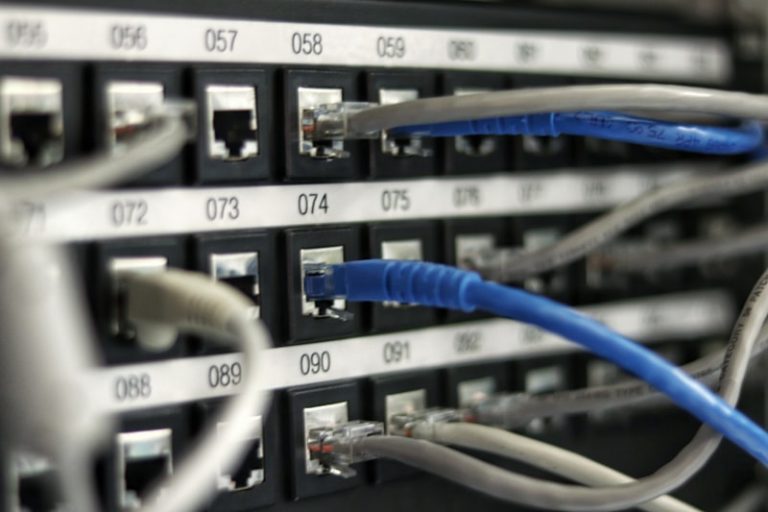

From Proprietary Hardware to Software
Network Function Virtualization (NFV) represents one of the most significant architectural shifts in telecommunications and enterprise networking since the adoption of IP. Rather than deploying dedicated, proprietary hardware appliances for each network function—routers, firewalls, load balancers, WAN optimizers—NFV runs these functions as software on standard, commercial off-the-shelf (COTS) x86 servers. The European Telecommunications Standards Institute (ETSI) formalized the NFV architecture in 2012 through its Industry Specification Group.
The ETSI NFV Architecture
The ETSI NFV framework defines three primary components:
- NFV Infrastructure (NFVI): The physical and virtual resources on which VNFs run. This includes compute (servers with x86 CPUs), storage (SAN, NAS, or distributed storage like Ceph), and networking (virtual switches like Open vSwitch, SR-IOV for hardware acceleration). The NFVI abstracts physical hardware through a hypervisor (KVM, VMware ESXi) or container runtime (Kubernetes with Multus CNI).
- Virtual Network Functions (VNFs): Software implementations of network functions that run on NFVI. Examples include virtual routers (vRouter), virtual firewalls (vFW), virtual load balancers (vLB), virtual WAN optimization, and virtual evolved packet core (vEPC) for mobile networks. A single server can host multiple VNFs from different vendors simultaneously.
- Management and Orchestration (MANO): The brain of the NFV architecture, responsible for lifecycle management of VNFs and network services. MANO handles VNF onboarding, instantiation, scaling (manual and auto-scaling based on performance metrics), healing (restarting failed VNFs), and termination. It also manages service chaining—connecting VNFs in the correct order to form end-to-end network services.
Business and Operational Benefits
- Capital Expenditure Reduction: By replacing proprietary hardware with COTS servers, enterprises typically achieve 40-60% CapEx reduction. A dedicated hardware load balancer from a Tier-1 vendor costs $50,000-$150,000; a virtual load balancer license for the same vendor on a $10,000 server provides equivalent functionality.
- Service Agility: Deploying a new network function goes from weeks (procure hardware, ship, rack, cable, configure) to hours (instantiate VNF from a template). This enables true DevOps practices in networking, with infrastructure-as-code and CI/CD pipelines for network services.
- Vendor Independence: NFV decouples network function software from the underlying hardware, reducing vendor lock-in. Organizations can run VNFs from multiple vendors on the same hardware platform.
- Elastic Scaling: VNFs can be scaled up (adding more vCPU/RAM to an existing instance) or scaled out (deploying additional instances and load balancing across them) based on real-time demand—impossible with fixed hardware appliances.
NFV and 5G: Cloud-Native Network Functions
The evolution from VNFs to Cloud-Native Network Functions (CNFs) running on Kubernetes represents the next frontier, particularly relevant for 5G core networks. CNFs decompose monolithic VNFs into microservices, enabling even greater agility, resilience, and resource efficiency.