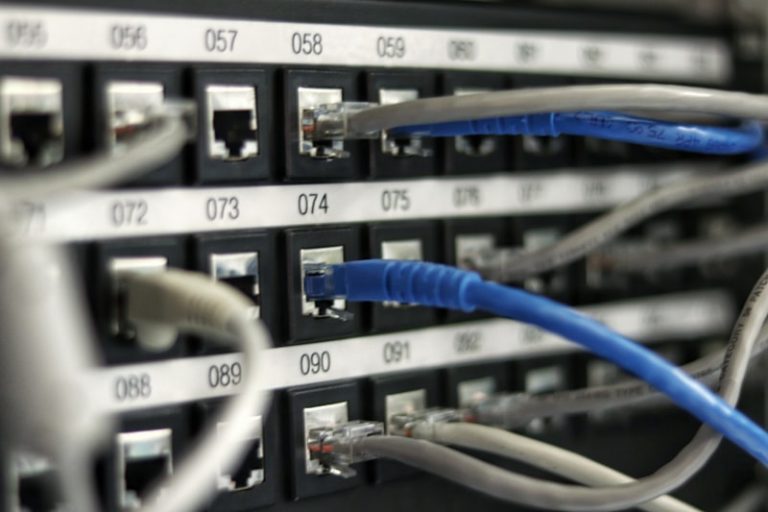

Why Network DR Planning Matters
Disaster Recovery (DR) planning for network infrastructure is often overshadowed by server and application recovery—yet without a functioning network, restored servers are useless. A comprehensive network DR plan ensures that when disaster strikes—whether a natural event, cyberattack, or equipment failure—network services can be restored within defined timeframes.
The DR Planning Framework
- Risk Assessment: Identify and prioritize threats: natural disasters (floods, earthquakes, ice storms—relevant for Canadian winters), infrastructure failures (power grid, carrier fiber cuts), cyber incidents (ransomware encrypting network device configurations), and human error (misconfiguration causing widespread outages).
- Business Impact Analysis (BIA): Quantify the financial and operational impact of network downtime. For a financial services firm, network downtime might cost $50,000 per minute. For a retail chain, the cost might be $5,000 per hour. These numbers directly inform the investment in DR capabilities.
- Strategy Selection: Hot site (fully operational replica, sub-minute failover, highest cost), warm site (pre-provisioned infrastructure requiring some configuration, failover in hours), or cold site (empty space with power and cooling, failover in days).
Network-Specific DR Measures
- Configuration Backup Automation: Tools like Oxidized and RANCID automatically pull and version-control configurations from all network devices. Store backups in at least two geographically separate locations. Test configuration restoration on spare hardware to ensure backups are valid.
- DNS Failover: Use low TTL values (60-300 seconds) on critical DNS records to enable rapid traffic redirection during outages. Implement health-check-based failover using services like AWS Route 53, Cloudflare Load Balancing, or DNS Made Easy.
- BGP Anycast: Advertise the same IP prefix from multiple data centers. If one site fails, BGP automatically withdraws routes and traffic shifts to surviving sites—typically within minutes with proper tuning.
- Out-of-Band Management: Deploy console servers with LTE/4G modems at every site to ensure management access even when the primary WAN is down. OpenGear and Cradlepoint offer purpose-built solutions.
- Documented Network Diagrams and IP Schemes: Maintain up-to-date Layer 1, 2, and 3 diagrams in a format accessible without the production network. Store printed copies off-site as a last resort.
Testing Is Non-Negotiable
An untested DR plan is a plan that will fail. Conduct tabletop exercises annually where the team walks through a realistic disaster scenario. Perform a full failover test at least bi-annually—actually cut over to the DR site and verify all services function. Document lessons learned and update the plan accordingly.