
The Backbone of Every Network
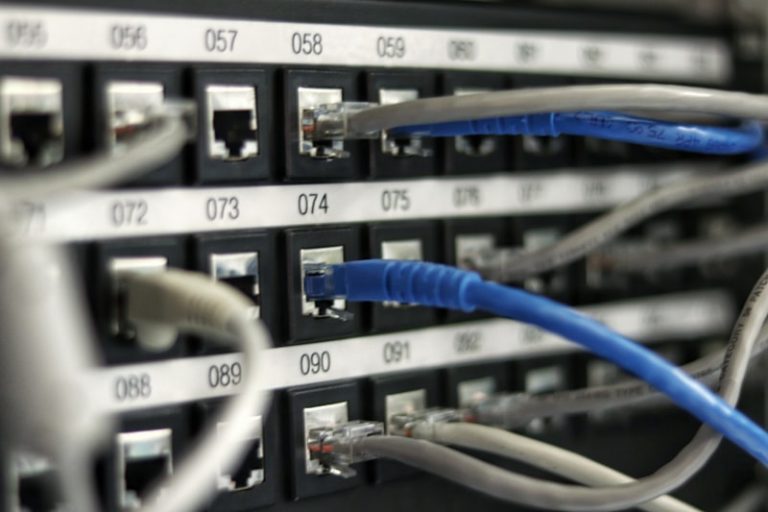
Despite the wireless revolution, structured cabling remains the foundation of reliable enterprise networking. The choice of cable category directly impacts maximum throughput, distance limitations, and future upgradeability. Understanding the TIA/EIA-568 standards is essential for anyone involved in network design or IT infrastructure planning.
Copper Cabling Categories
- Category 5e (Enhanced Cat5): Rated for 100 MHz bandwidth and 1 Gbps (1000BASE-T) at distances up to 100 meters. Cat5e remains adequate for basic office connectivity but is legacy by modern standards. It uses unshielded twisted pair (UTP) construction and the standard RJ45 connector. While still common in existing installations, Cat5e should not be specified for new deployments.
- Category 6: Supports 250 MHz bandwidth, enabling 10GBASE-T at reduced distances of up to 55 meters. At 100 meters, it falls back to 1 Gbps. Cat6 features tighter twists and a physical separator between pairs to reduce crosstalk. Suitable for small-to-medium office deployments where 10 Gbps is needed only in shorter runs.
- Category 6a (Augmented): Rated for 500 MHz and supports full 10 Gbps (10GBASE-T) at the full 100-meter distance. Cat6a is the minimum recommended standard for new commercial office installations. It uses thicker conductors and better shielding (often F/UTP or S/FTP) to maintain signal integrity at higher frequencies.
- Category 7: Supports 600 MHz and 10 Gbps at 100 meters. The key distinction is mandatory shielding for each individual twisted pair (S/FTP construction) and the use of GG45 or TERA connectors rather than standard RJ45. Cat7 is not recognized by TIA/EIA but is specified in ISO/IEC 11801. It has limited adoption in North America.
- Category 8: Rated for a massive 2,000 MHz, supporting 25GBASE-T and 40GBASE-T—but only at distances up to 30 meters. Cat8 is specifically designed for data center applications: top-of-rack to end-of-row switching, server-to-switch connections, and edge computing deployments where 25/40 Gbps copper offers cost and latency advantages over fiber optics.
Shielded vs Unshielded
The choice between Unshielded Twisted Pair (UTP) and Shielded (F/UTP, S/FTP) depends on the electromagnetic environment. Industrial settings with high EMI, medical facilities, and manufacturing floors typically require shielded cable. Modern office environments with standard electronics generally work well with UTP. Shielded cable requires proper grounding at every termination point—a single ungrounded shield can act as an antenna, making things worse.
Fiber Optics: The Alternative
For distances beyond 100 meters or bandwidth beyond 40 Gbps, fiber optics become the only option. Single-mode fiber (OS2) supports 100 Gbps at 40 km, while multi-mode fiber (OM4/OM5) supports 100 Gbps at 150 meters—ideal for data center spine-leaf architectures. Modern enterprise backbone connections between buildings and floors should always use single-mode fiber for future-proofing.